
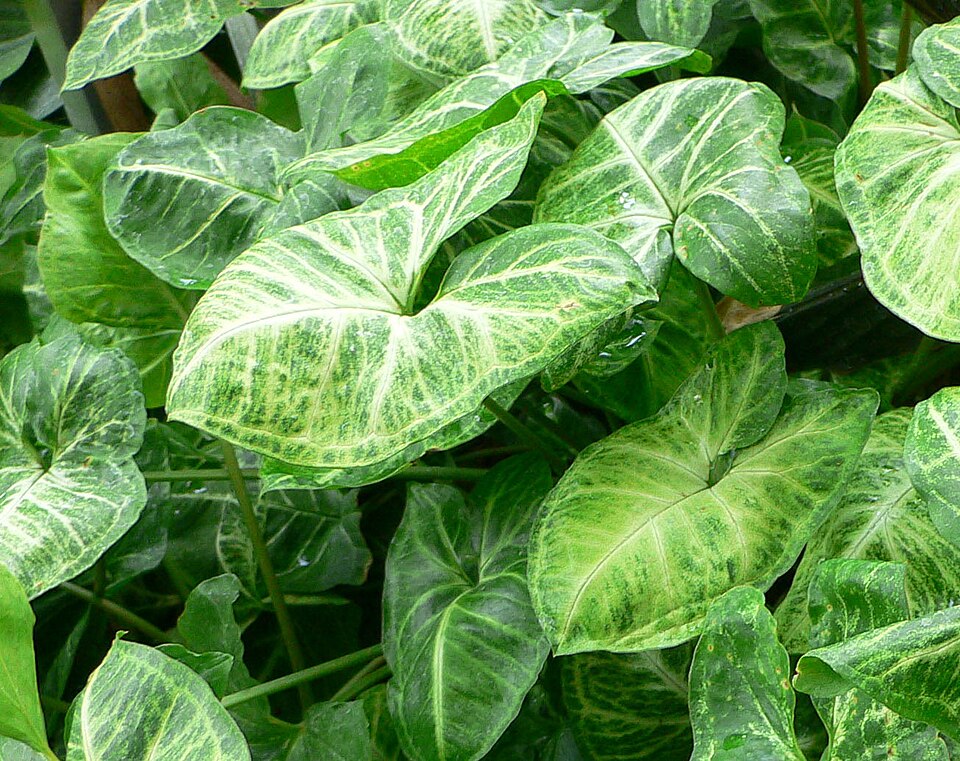
Arrowhead Plant
Syngonium spp.
Mostly fine, with one catch.
Arrowhead Vine (Syngonium podophyllum) is a popular trailing houseplant that contains insoluble calcium oxalate crystals (raphides) — microscopic needle-like structures…
Symptoms reported in cats
Most serious first.
- 1 Swelling of the tongue, lips, and pharynx Rapid. · Swelling of the tongue and throat can be significant. In rare cases, severe swelling of the laryngeal region (airway) can lead to respiratory distress.Difficulty Breathing (Dyspnea)
- 2 Dyspnea Rapid (following swelling). · This occurs if the swelling of the tongue and pharynx obstructs the airway. While the overall prognosis for this plant is generally good, airway obstruction requires immediate veterinary attention.
- 3 Oral Irritation (intense burning sensation, pain) Immediate upon chewing. · The cat may demonstrate this pain by pawing at the mouth or shaking its head. The crystals cause inflammation and redness (erythema) of the lips, tongue, and mouth.
- 4 Excessive Drooling (Ptyalism) Immediate. · This is a physiological response to the intense irritation and burning in the mouth.Swelling (Edema)
- 5 Vomiting and Diarrhea These are general signs of gastrointestinal upset associated with the ingestion of the plant material.
- 6 Loss of appetite The cat often refuses to eat due to the oral pain and swelling.
Important notes
Arrowhead Vine (Syngonium podophyllum) is a popular trailing houseplant that contains insoluble calcium oxalate crystals (raphides) — microscopic needle-like structures bundled in specialised cells throughout the leaves and stems. When a cat bites or chews any part of the plant, these crystals are forcibly ejected and physically penetrate the soft tissues of the mouth, tongue, and throat, causing immediate and intense irritation. Systemic toxicity is uncommon because the pain typically stops the cat from consuming a large amount.
- Symptoms: Immediate oral pain, intense drooling, pawing at the mouth, swelling of the lips, tongue, and throat, and difficulty swallowing; vomiting may follow.
- Rapid onset: Discomfort begins within seconds of chewing — this is the plant's natural defence mechanism.
- Action: Rinse the cat's mouth with water to help flush crystals. Contact a vet if swelling is severe or symptoms do not resolve within an hour.
This summary was compiled from multiple sources and is for informational use only. It is not a diagnosis or treatment plan. Toxicity varies with the substance, amount, plant part and the individual cat. If you think your cat may have been exposed to a toxic substance, contact a veterinarian right away.