
 ←
←
Jimson Weed
Datura stramonium
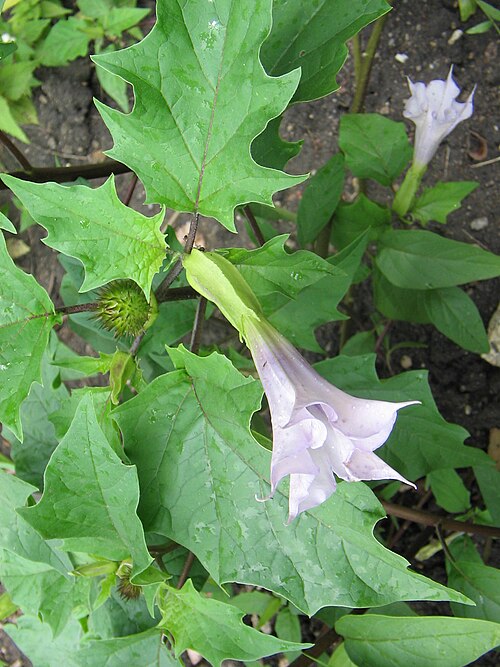
Jimson Weed (Datura stramonium), also called thorn apple or devil’s trumpet, is extremely toxic to cats. Every part of the plant can be dangerous, including the leaves, seeds, flowers, and stems. The plant contains tropane alkaloids such as atropine, scopolamine, and hyoscyamine. These chemicals block normal nerve signals in the body. Even a small exposure can affect the heart, brain, eyes, gut, and body temperature. Signs can include wide pupils, drooling or dry mouth, vomiting, fast heartbeat, agitation, weakness, tremors, seizures, or collapse. This is an emergency. If your cat chews or eats any part of Jimson weed, contact a veterinarian or emergency clinic immediately.
Important Notes
Toxic compounds: tropane alkaloids — atropine, scopolamine, hyoscyamine; all parts toxic; spiky seed pods most concentrated
Mechanism: competitive antagonism of muscarinic acetylcholine receptors, causing full anticholinergic syndrome (dry, fast, hot, blind, mad)
Symptoms: dilated pupils (mydriasis), dry mouth, rapid heart rate (tachycardia), elevated body temperature, disorientation, agitation, hallucination-like behaviour, seizures, coma
The seed pods are the most concentrated source and can persist on the ground for months
Any suspected ingestion is a veterinary emergency — tropane alkaloid poisoning can be rapidly fatal
Potentially Toxic Parts
Entire Plant
Possible Symptoms Reported in Cats
Twitching and Convulsions
Neurological · Not explicitly specified in the provided sources.
Rapid Breathing (Tachypnea)
Respiratory · Not explicitly specified in the provided sources.
Dilated Pupils (Mydriasis)
Neurological · Not explicitly specified in the provided sources.
Rapid Pulse (Tachycardia)
Cardiac · Not explicitly specified in the provided sources.
Diarrhea
Gastrointestinal · Not explicitly specified in the provided sources.
Disclaimer: This summary was compiled from multiple sources and is for informational use only. It is not a diagnosis or treatment plan. Toxicity can vary based on the substance, amount, plant part, and individual cat. If you think your cat may have been exposed to a toxic substance, contact a veterinarian right away.