
 ←
←
Holly
Ilex spp.
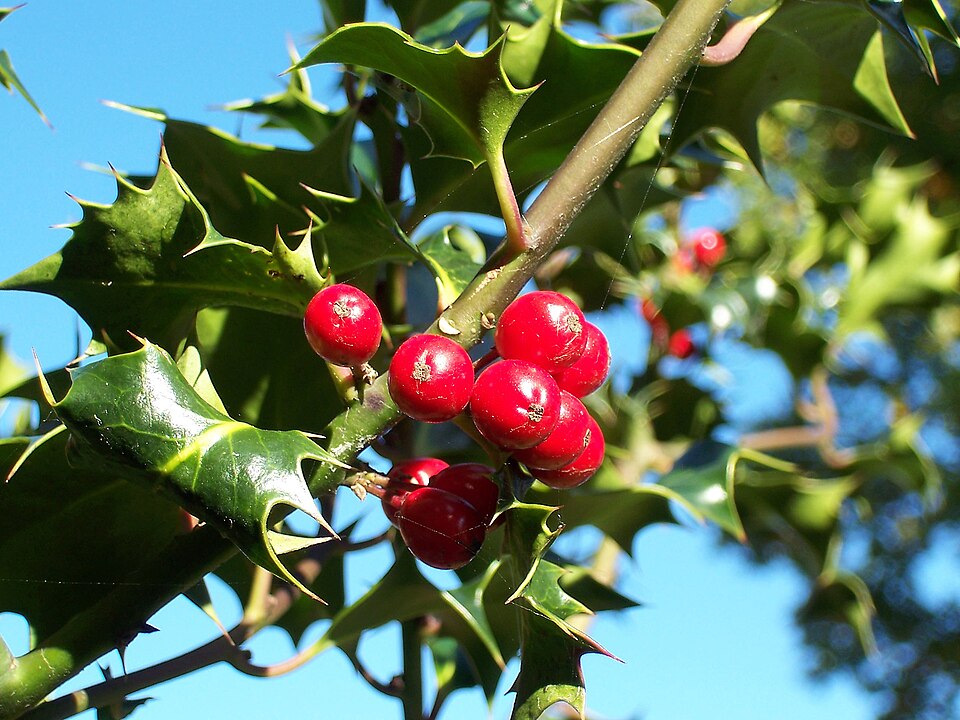
Holly (Ilex spp.) includes many shrubs and trees with glossy leaves and bright berries. It is toxic to cats, and the berries are often the easiest part for a cat to find or swallow. Holly contains saponins and other irritating compounds. These can upset the stomach and intestines. The sharp leaves can also irritate the mouth, while fallen berries may attract curious cats during the holiday season. A cat that eats holly may drool, vomit, have diarrhea, smack the lips, or seem uncomfortable. Keep holly decorations and outdoor berries away from cats. Call a veterinarian if your cat eats several berries, vomits repeatedly, or seems weak.
Important Notes
Toxic compounds: saponins (ilicin and related compounds), methylxanthine-related compounds, trace cyanogens in berries
Mechanism: saponins cause intense GI mucosal irritation; systemic absorption may cause CNS and cardiac effects at higher doses
Symptoms: severe nausea, vomiting, diarrhea, lethargy, excessive head shaking, drooling; even 1–2 berries can cause significant symptoms
All holly species should be treated as hazardous — both fresh plants and dried/decorative holly
Contact your vet if any holly berry ingestion is suspected
Potentially Toxic Parts
Leaf
Fruit
Possible Symptoms Reported in Cats
Vomiting and Diarrhea
Gastrointestinal · Acute (Clinical signs can occur after ingesting as few as two berries).
Abdominal Pain
Gastrointestinal · Acute.
Excessive Drooling (Ptyalism) or Lip Smacking
Gastrointestinal · Immediate (Upon chewing or ingestion).
Lethargy or Depression
Neurological · Acute (Following GI symptoms).
Head Shaking or Pawing at Mouth
Dermal · Immediate.
Disclaimer: This summary was compiled from multiple sources and is for informational use only. It is not a diagnosis or treatment plan. Toxicity can vary based on the substance, amount, plant part, and individual cat. If you think your cat may have been exposed to a toxic substance, contact a veterinarian right away.