
 ←
←
Plums
Plums
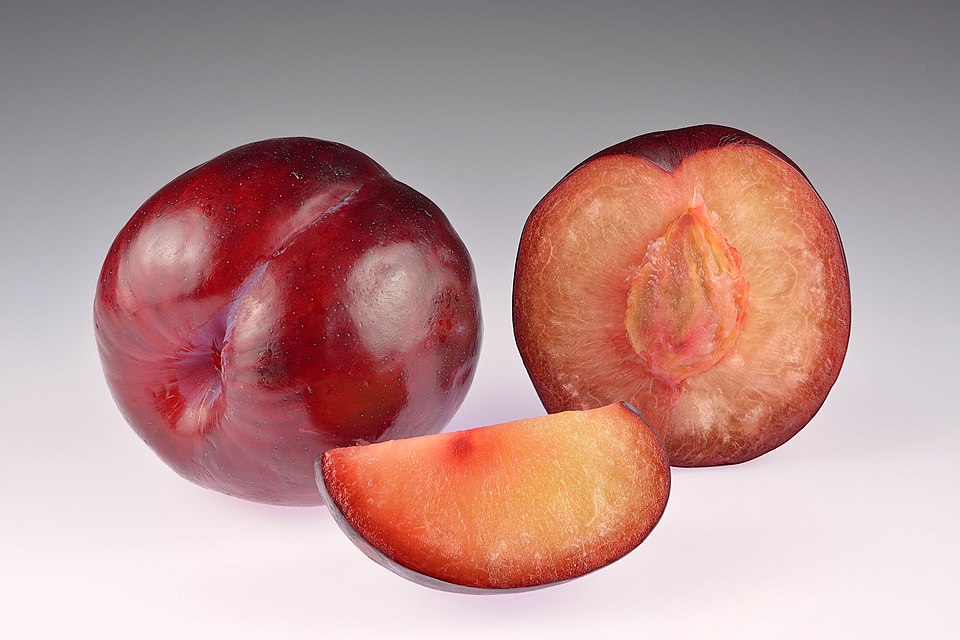
Plums (Prunus domestica) are a sweet fruit, and the fleshy part is generally safe for cats in very small amounts. However, the pit, stems, and leaves are highly dangerous because they contain amygdalin. When a cat chews or crushes a plum pit, the amygdalin mixes with enzymes in their digestive system to release hydrogen cyanide (HCN). This is a deadly poison that stops the body's cells from using oxygen. If a cat eats a pit, they may show signs like heavy breathing, weakness, vomiting, and even seizures or a coma. While a tiny piece of ripe plum flesh without the pit won't hurt your cat, it has a lot of sugar and gives them no real nutrition. Never let your cat near the pits or leaves, and contact a veterinarian immediately if you think they have chewed on one.
Important Notes
Pit, stems, and leaves: toxic — amygdalin yields HCN via beta-glucosidase cleavage
Mechanism: HCN inhibits cytochrome c oxidase, halting cellular respiration
Symptoms from pit ingestion: rapid breathing, weakness, drooling, vomiting; severe cases cause seizures and respiratory failure
Ripe flesh: safe in very small amounts, but offers no nutritional benefit and is high in sugar
Always remove the pit completely before offering any fruit; avoid dried plums (prunes) as high fibre causes diarrhea
Potentially Toxic Parts
Pit
Stem
Peel
Skin
Seed
Leaf
Flesh
Fruit
Possible Symptoms Reported in Cats
Difficulty Breathing and Hyperventilation
Respiratory · Rapid onset (often within minutes to a few hours).
Systemic Shock and Coma
Gastrointestinal · Rapidly following initial respiratory distress.
Vomiting, Diarrhea, and Abdominal Pain
Gastrointestinal · Shortly after ingestion (often within a few hours).
Trouble Walking and Mental Confusion
Neurological · Rapid onset.
Cherry-Red Skin or Mucous Membranes
Dermal · Rapid onset.
Gastrointestinal or Throat Obstruction
Gastrointestinal · Immediate (if causing choking) or variable (can take hours to days if lodged further down in the int
The symptoms a cat shows after ingesting or being exposed to plums, particularly the toxic pits
Metabolic
Disclaimer: This summary was compiled from multiple sources and is for informational use only. It is not a diagnosis or treatment plan. Toxicity can vary based on the substance, amount, plant part, and individual cat. If you think your cat may have been exposed to a toxic substance, contact a veterinarian right away.