
 ←
←
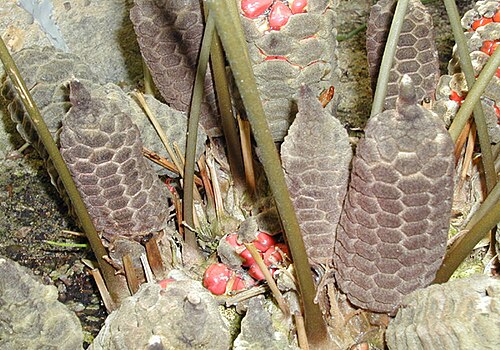
Coontie Palm
Zamia pumila
Coontie Palm (Zamia integrifolia) is a small, ground-level cycad native to Florida and the Caribbean, commonly used in landscaping as a low-maintenance ornamental. Despite the "palm" name, it is not a true palm — it belongs to the ancient Cycadaceae family and carries the same severe hepatotoxic risk as all cycads. It contains cycasin, a methylazoxymethanol glycoside that the gut converts into a potent liver poison, and the neurotoxin BMAA. Seeds carry the highest concentration and are the most dangerous component.
Important Notes
Symptoms: Vomiting, bloody diarrhea, severe lethargy, jaundice, abdominal pain, seizures; irreversible liver failure within 24–72 hours without treatment.
Easily mistaken for a safe plant: Its low, fern-like appearance makes it seem innocuous, but it is equally deadly to all cycad species.
Action: Life-threatening emergency. Bring the cat and a sample of the plant to a vet immediately — do not wait for symptoms to worsen.
Potentially Toxic Parts
Seed
All parts of the plant
Possible Symptoms Reported in Cats
Jaundice (icterus), abdominal swelling (ascites), and liver necrosis
Hepatic · Delayed; typically develops within 48–72 hours post-ingestion.
Persistent vomiting, diarrhea (often bloody or dark/tarry), anorexia, and abdominal pain
Gastrointestinal · Rapid; typically within 15 minutes to 4 hours of ingestion.
Ataxia (wobbly gait), tremors, seizures, depression, and muscular paralysis
Neurological · Variable; can occur early or develop alongside liver failure.
Bruising (petechiae or ecchymotic hemorrhages), abnormal bleeding, and blood clots
Hematological · Delayed (associated with the progression of liver failure).
Lethargy, weakness, and increased thirst (polydipsia)
Renal · Within hours of ingestion.
Disclaimer: This summary was compiled from multiple sources and is for informational use only. It is not a diagnosis or treatment plan. Toxicity can vary based on the substance, amount, plant part, and individual cat. If you think your cat may have been exposed to a toxic substance, contact a veterinarian right away.