
 ←
←
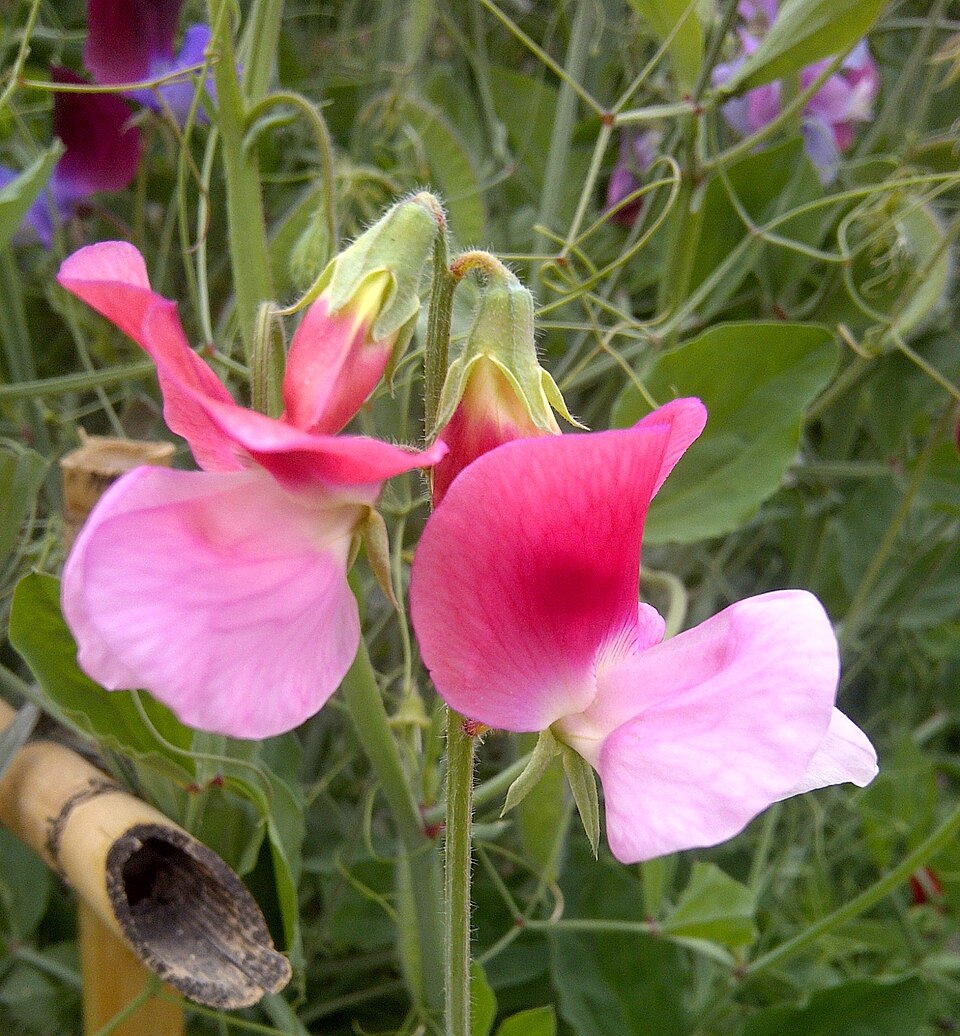
Sweet Pea
Lathyrus odoratus
Sweet Pea (Lathyrus odoratus) is a fragrant climbing vine whose risk to cats is genuinely disputed: the ASPCA lists Sweet Pea (under Lathyrus latifolius) as non-toxic to cats, while Pet Poison Helpline treats sweet peas as toxic plants. The plant — especially its seeds and seed pods — contains beta-aminopropionitrile (BAPN), a lathyrogen neurotoxin that can cause "lathyrism" with weakness and neuromuscular signs after large or repeated ingestion, although documented poisonings involve mainly grazing animals and cat-specific cases are scarce. Because the danger cannot be ruled out, treat it with caution: a nibbled leaf is unlikely to harm a cat, but do not let cats chew the plant, and keep seeds and pods out of reach. Do not confuse it with the edible garden pea (Pisum sativum).
Important Notes
Authorities disagree: the ASPCA lists Sweet Pea (Lathyrus latifolius) as non-toxic to cats, while Pet Poison Helpline treats sweet peas (Lathyrus spp.) as toxic; this entry is graded cautious to reflect that uncertainty
Toxic compound: beta-aminopropionitrile (BAPN), a lathyrogen concentrated in seeds and seed pods; it inhibits lysyl oxidase (collagen/elastin cross-linking) and can cause neurolathyrism
Documented lathyrism cases involve mainly grazing animals after substantial or repeated ingestion; cat-specific poisoning data is scarce
Keep seeds and seed pods out of reach and discourage chewing; a single nibbled leaf is unlikely to cause harm
Contact a veterinarian if a cat eats seeds or pods, or shows weakness, stumbling, or other neuromuscular signs
Potentially Toxic Parts
Stem
Entire Plant
Seed
Leaf
Flower
Possible Symptoms Reported in Cats
Seizures
Neurological · Rare; reported with substantial ingestion.
Lethargy and weakness
Neurological · Hours to days after ingestion.
Neuromuscular signs (stumbling, lameness, circling)
Neurological · Delayed; associated with large or repeated ingestion.
Loss of appetite
Gastrointestinal · Hours after ingestion.
Disclaimer: This summary was compiled from multiple sources and is for informational use only. It is not a diagnosis or treatment plan. Toxicity can vary based on the substance, amount, plant part, and individual cat. If you think your cat may have been exposed to a toxic substance, contact a veterinarian right away.