
 ←
←
Curly Dock / Sorrel
Rumex spp.
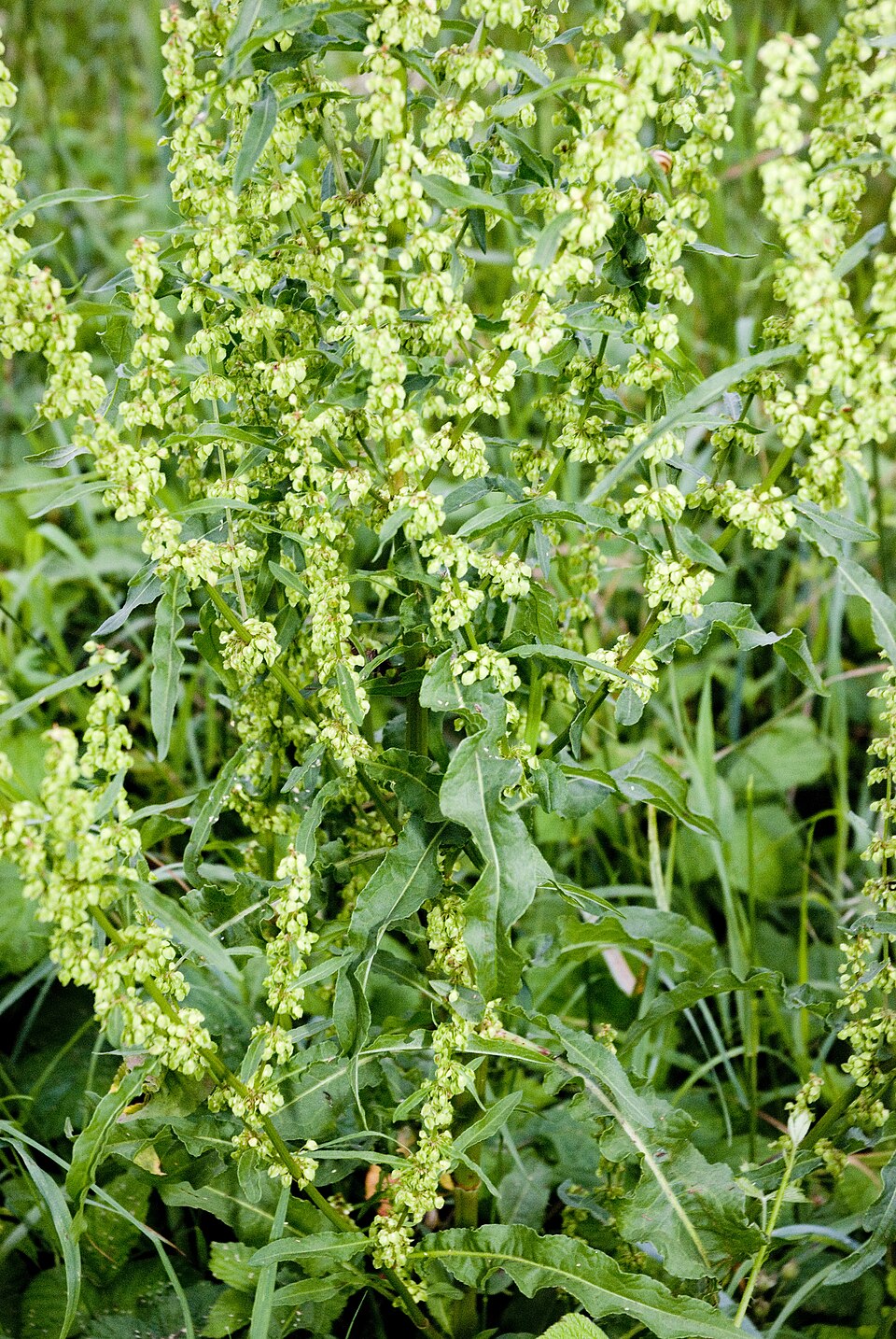
Curly dock (Rumex crispus), also called yellow dock or dock, is a common garden weed and wild plant. It often grows in fields, along roadsides, and in disturbed soil. It is not safe for cats, and cats should not be allowed to chew it or have repeated exposure to it, especially outdoor cats that may encounter it in grassy or roadside areas. The main concerns are soluble oxalates and anthraquinone glycosides. Oxalates come in different forms. Some plants contain insoluble oxalate crystals, which usually cause immediate pain and irritation in the mouth. Curly dock, however, contains soluble oxalates, which are more easily absorbed into the body. Once absorbed, they can bind to calcium in the blood and may lead to low calcium levels. With repeated exposure, they may also increase the risk of calcium oxalate crystal formation in the kidneys. Anthraquinone glycosides can also irritate the digestive system and may contribute to diarrhea or discomfort. If a cat eats curly dock, possible signs include drooling, vomiting, diarrhea, loss of appetite, and low energy. The risk may be higher if a cat eats a larger amount or already has kidney problems. The leaves, stems, and seeds should all be kept away from cats. Remove curly dock from areas where your cat spends time, and do not offer it as an edible wild plant. If your cat develops clear digestive signs, weakness, tremors, abnormal urination, or if you are unsure how much was eaten, contact a veterinarian promptly.
Important Notes
Symptoms: Vomiting, diarrhea, lethargy, and muscle tremors from soluble oxalate absorption; dark urine and kidney-related signs with chronic or large ingestion.
Chronic exposure is the greater concern: A single nibble is unlikely to cause serious harm, but cats that repeatedly graze on this weed may develop calcium oxalate nephropathy (kidney damage).
Action: Discourage access if the plant is in your garden. Contact a vet if a cat has consumed a large amount or shows signs of weakness or muscle tremors.
Potentially Toxic Parts
Leaf
Stem
Seed
Possible Symptoms Reported in Cats
Vomiting and Loss of Appetite (Inappetence)
Gastrointestinal · Rapid; these are cited as "initial clinical signs."
Tremors, Twitching, and Seizures (Tetany)
Neurological · Rapid following significant absorption.
Kidney Failure (Acute Renal Failure)
Renal · Delayed (as crystals precipitate in the kidneys).
Hematuria (Bloody Urine)
Renal · Delayed (associated with renal damage).
Hypersalivation (Drooling)
Gastrointestinal · Rapid.
Disclaimer: This summary was compiled from multiple sources and is for informational use only. It is not a diagnosis or treatment plan. Toxicity can vary based on the substance, amount, plant part, and individual cat. If you think your cat may have been exposed to a toxic substance, contact a veterinarian right away.