 ←
←
Castor Bean
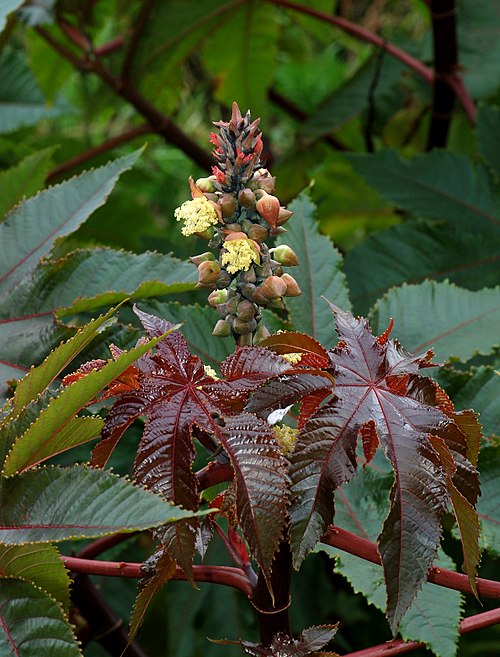
Ricinus communis
Castor Bean (Ricinus communis) contains ricin — one of the most toxic naturally occurring substances known. Ricin is a protein toxin classified as an A-B toxin: once inside cells, the active A-chain depurinates the 28S ribosomal RNA, completely shutting down protein synthesis in every affected cell. Even a single seed, if chewed (releasing the ricin from within), can be lethal to a cat. The seeds are visually striking — smooth, mottled, and bean-like — which makes them an attractive hazard.
Important Notes
Symptoms: Severe vomiting and bloody diarrhea within a few hours; extreme dehydration, abdominal pain, and muscle tremors; multi-organ failure (liver, kidney, spleen), seizures, and death within 3–5 days if untreated.
Seeds are the lethal component: The leaves and stems are irritating but far less toxic than the seeds. Chewing a seed releases the ricin; a swallowed whole seed may pass without full toxin release.
Action: This is an extreme toxicological emergency. Rush to a vet immediately — there is no antidote for ricin, and supportive care must begin as early as possible.
Potentially Toxic Parts
Seed
Possible Symptoms Reported in Cats
Tremors and seizures
Neurological · Rapid progression following gastrointestinal signs.
Organ failure
Hepatic · Progression from initial symptoms.
Vomiting, diarrhea (often bloody), abdominal pain, and loss of appetite
Gastrointestinal · Rapid (symptoms often manifest quickly after ingestion).
Dehydration
Metabolic · Secondary to rapid fluid loss from vomiting and diarrhea.
Disclaimer: This summary was compiled from multiple sources and is for informational use only. It is not a diagnosis or treatment plan. Toxicity can vary based on the substance, amount, plant part, and individual cat. If you think your cat may have been exposed to a toxic substance, contact a veterinarian right away.