
 ←
←
Heavenly Bamboo
Nandina spp.
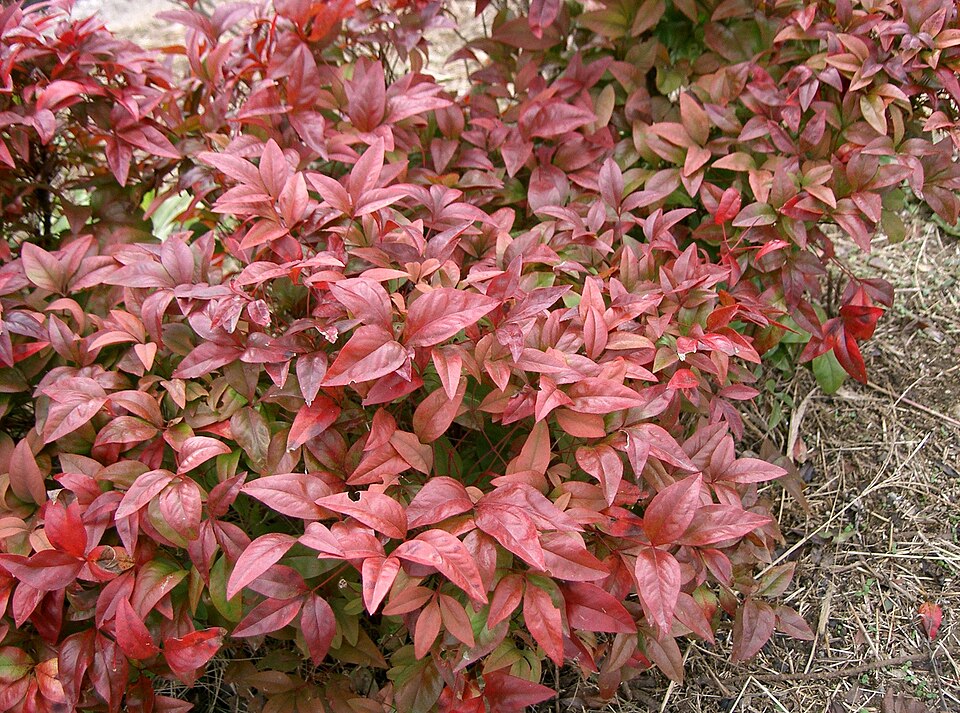
Heavenly Bamboo (Nandina domestica) is an ornamental shrub with red berries. Despite the name, it is not true bamboo, and it is toxic to cats. The plant contains cyanogenic compounds, especially in the berries. When these compounds are broken down, they can release hydrogen cyanide, which interferes with the body’s ability to use oxygen. Birds and pets can be attracted to the bright berries. A cat that eats heavenly bamboo may vomit, have diarrhea, seem weak, breathe faster than normal, or collapse in severe cases. Keep berries and pruned branches away from cats. Call a veterinarian immediately if your cat eats the berries or shows weakness or breathing changes.
Important Notes
Toxic compounds: cyanogenic glycosides and isoquinoline alkaloids (nantenine) throughout the plant; berries most concentrated
Mechanism: cyanogenic compounds yield HCN on digestion, inhibiting cytochrome c oxidase and halting cellular respiration
Symptoms: vomiting, lethargy, weakness, difficulty breathing; severe ingestion may cause convulsions and collapse
The attractive red berries pose the greatest risk to curious cats
Seek veterinary care promptly if berry ingestion is suspected; HCN toxicity can progress rapidly
Potentially Toxic Parts
Leaf
Seed
Fruit
Possible Symptoms Reported in Cats
Seizures, Tremors, Ataxia (Incoordination), or Coma
Neurological · 10–60 minutes.
Hypotension (Low Blood Pressure), Arrhythmias (Irregular Heartbeat), and Sudden Collapse
Cardiac · 10–60 minutes.
Tachypnea (Rapid Breathing), Dyspnea (Difficulty Breathing), or Hyperventilation
Respiratory · 10–60 minutes after ingestion.
Bright Red Gums/Mucous Membranes
Hematological · 10–60 minutes.
Vomiting and Diarrhea
Gastrointestinal · 10–60 minutes.
Bitter Almond" Odor on Breath
Respiratory · Acute.
Disclaimer: This summary was compiled from multiple sources and is for informational use only. It is not a diagnosis or treatment plan. Toxicity can vary based on the substance, amount, plant part, and individual cat. If you think your cat may have been exposed to a toxic substance, contact a veterinarian right away.