
 ←
←
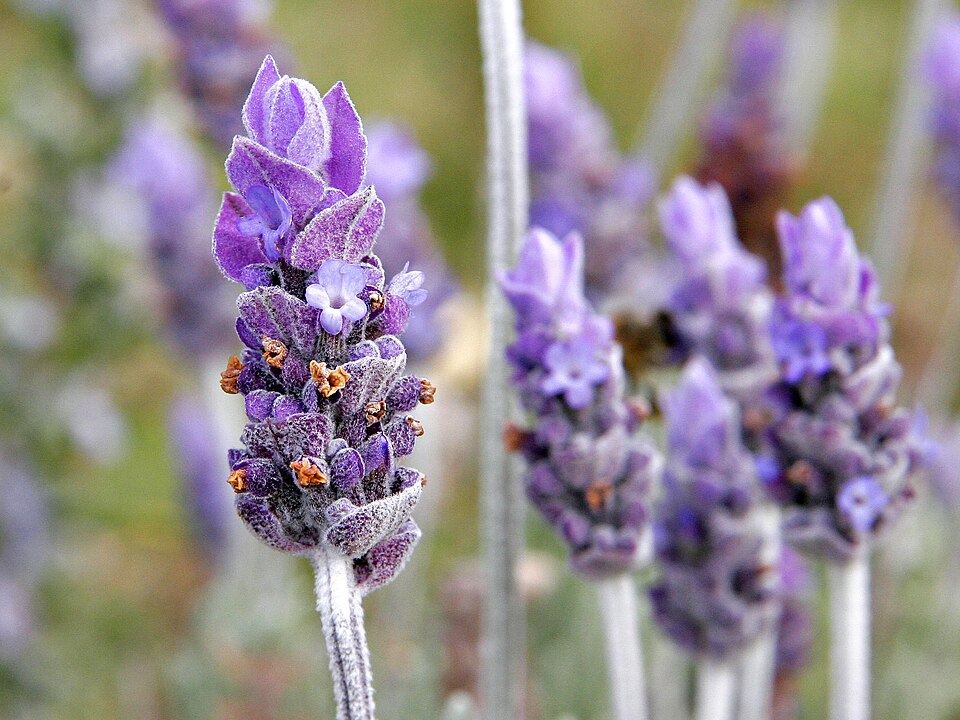
Lavender
Lavandula spp.
Lavender (Lavandula spp.) is mildly toxic to cats due to the essential oils concentrated in its flowers and foliage — primarily linalool and linalyl acetate. Cats lack the liver enzyme glucuronyl transferase needed to metabolise these terpenoid compounds effectively, so even small exposures from chewing flowers or inhaling concentrated diffuser oil can cause upset.
Important Notes
Toxic compounds: linalool and linalyl acetate (monoterpenoid compounds); concentrated in flowers and essential oil
Mechanism: cats cannot adequately glucuronidate terpenoids, allowing accumulation that irritates the GI tract and mildly stresses the liver
Symptoms: vomiting, diarrhea, drooling, lethargy; essential oil diffusers can cause respiratory irritation and systemic exposure via inhalation
A few leaves are unlikely to cause serious harm; essential oil products are far more concentrated and should be kept away from cats
Contact your vet if your cat ingests lavender oil or essential oil products
Potentially Toxic Parts
Stem
Leaf
Entire Plant
Flower
Possible Symptoms Reported in Cats
Liver Failure / Liver Damage
Hepatic · Delayed (may take days to manifest as toxins build up).
Lethargy, Weakness, Ataxia (Uncoordinated/Wobbly Gait), Muscle Tremors, Seizures, Disorientation
Neurological · Immediate to Delayed (symptoms may progress over days).
Difficulty Breathing (Dyspnea), Coughing, Sneezing, Wheezing
Respiratory · Immediate (often triggered by inhalation of diffused oils).
Changes in Heart Rate (Bradycardia or Tachycardia)
Cardiac · Not explicitly specified, likely concurrent with systemic toxicity.
Vomiting, Diarrhea, Nausea, Drooling (Hypersalivation), Inappetence (Loss of Appetite)
Gastrointestinal · Symptoms can be noticeable immediately or develop shortly after ingestion.
Redness, Erosions (Chemical Burns), Contact Dermatitis
Dermal · Variable (upon contact).
Disclaimer: This summary was compiled from multiple sources and is for informational use only. It is not a diagnosis or treatment plan. Toxicity can vary based on the substance, amount, plant part, and individual cat. If you think your cat may have been exposed to a toxic substance, contact a veterinarian right away.