
 ←
←
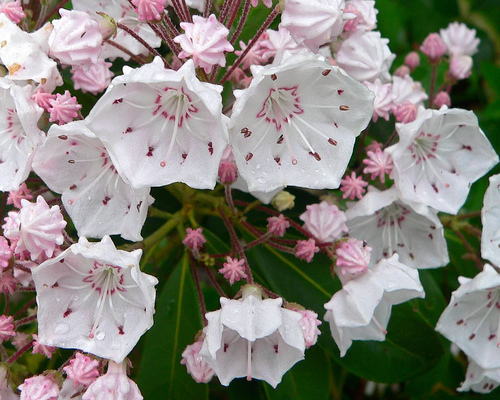
Mountain Laurel
Kalmia latifolia
Mountain Laurel (Kalmia latifolia) is an evergreen shrub related to rhododendrons and azaleas. It is highly toxic and very dangerous to cats, as every single part of the plant is poisonous, including the flowers, leaves, and even the nectar. The plant contains grayanotoxins, which disrupt the normal electrical signals in a cat's body. These toxins keep the cells in the heart, nerves, and muscles stuck in an active state, causing the body's systems to malfunction. Eating even a tiny amount can cause severe symptoms like heavy drooling, vomiting, loss of coordination, seizures, and a dangerously slow heart rate. Mountain laurel poisoning is a medical emergency that can be fatal. If your cat touches or eats any part of this plant, contact a veterinarian immediately.
Important Notes
Toxic compounds: grayanotoxins I, II, and III; all parts toxic — leaves, flowers, nectar, pollen, and berries
Mechanism: grayanotoxins hold voltage-gated sodium channels open, causing sustained membrane depolarisation in cardiac and skeletal muscle; this leads to hypotension, bradycardia, and arrhythmias
Symptoms: profuse drooling, vomiting, diarrhea, severe weakness, loss of coordination, abnormally slow heart rate, tremors, seizures; can be fatal without treatment
Even small amounts of leaves or flowers can cause serious cardiac effects in cats
Any suspected ingestion is a veterinary emergency
Potentially Toxic Parts
Leaf
Flower
Possible Symptoms Reported in Cats
Abnormally slow heart rate (bradycardia), irregular heart rhythms (arrhythmias), and low blood pressure (hypotension)
Cardiac · Within 1 to 4 hours (up to 12 hours)
CNS depression, lethargy, and profound muscle weakness
Neurological · Within 1 to 4 hours (up to 12 hours)
Muscle tremors and seizures
Neurological · Within 1 to 4 hours (up to 12 hours)
Transient (temporary) blindness
Neurological · Within 1 to 4 hours (up to 12 hours)
Vomiting, diarrhea, inappetence (loss of appetite), abdominal pain, and hypersalivation (drooling)
Gastrointestinal · Within 1 to 4 hours (and occasionally up to 12 hours) after ingestion
Disclaimer: This summary was compiled from multiple sources and is for informational use only. It is not a diagnosis or treatment plan. Toxicity can vary based on the substance, amount, plant part, and individual cat. If you think your cat may have been exposed to a toxic substance, contact a veterinarian right away.