
 ←
←
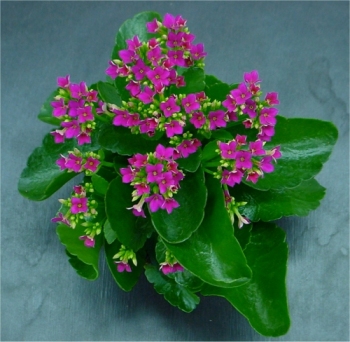
Kalanchoe / Mother of Millions / Widow's Thrill / Flaming Katy
Kalanchoe spp.
Kalanchoe (Kalanchoe spp.) is a popular succulent houseplant sold under names such as Flaming Katy, Mother of Millions, and Widow’s Thrill. It is toxic to cats. Kalanchoe contains bufadienolide cardiac glycosides. These chemicals can disturb the electrical signals that keep the heart beating normally. Smaller exposures often start with stomach upset, but larger exposures can affect heart rhythm. A cat that eats kalanchoe may vomit, have diarrhea, drool, seem weak, or lose interest in food. Serious cases can cause an abnormal heartbeat, collapse, or seizures. Keep kalanchoe plants away from cats, and call a veterinarian promptly if your cat eats any part of the plant.
Important Notes
Toxic compounds: bufadienolide cardiac glycosides throughout leaves, stems, and flowers
Mechanism: bufadienolides inhibit the Na+/K+-ATPase pump in cardiac muscle cells, causing irregular heart rhythm
Symptoms: drooling, vomiting, diarrhea, weakness, abnormal heart rate (bradycardia or arrhythmia), collapse
All parts of the plant are toxic; the small plantlets ('pups') produced by Mother of Millions varieties are equally hazardous
Seek veterinary care promptly — cardiac glycoside toxicity can escalate quickly; any cardiac symptoms require emergency attention
Potentially Toxic Parts
Entire Plant
Flower
Possible Symptoms Reported in Cats
Abnormal Heart Rhythm (Arrhythmias), Bradycardia (Slow Heart Rate), or Tachycardia (Fast Heart Rate)
Cardiac · Within the first 2 hours; signs can persist for 4–5 days.
Weakness, Depression, Tremors, Ataxia (Loss of Coordination), Seizures (Rare)
Neurological · Within the first 2 hours.
Rapid Breathing (Tachypnea), Difficulty Breathing
Respiratory · Within the first 2 hours.
Hyperkalemia (High Potassium levels)
Hematological · Within the first 2 hours.
Vomiting, Diarrhea, Drooling (Hypersalivation), Abdominal Pain
Gastrointestinal · Within the first 2 hours after exposure.
Disclaimer: This summary was compiled from multiple sources and is for informational use only. It is not a diagnosis or treatment plan. Toxicity can vary based on the substance, amount, plant part, and individual cat. If you think your cat may have been exposed to a toxic substance, contact a veterinarian right away.