
 ←
←
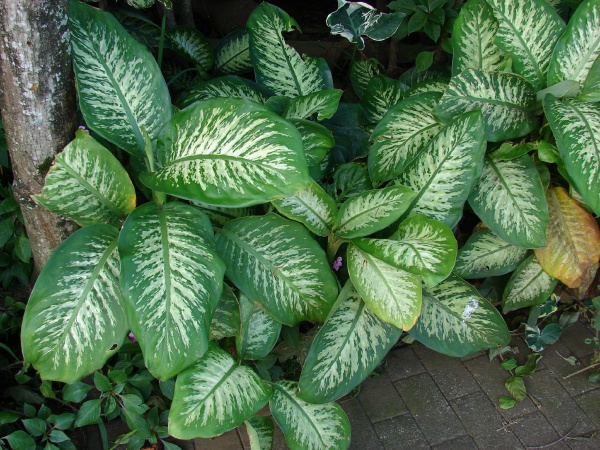
Dieffenbachia / Dumb Cane
Dieffenbachia spp.
Dieffenbachia, commonly called Dumb Cane, is a popular tropical houseplant toxic to cats because it contains insoluble calcium oxalate crystals (raphides) packed inside specialised cells throughout the leaves and stems. When a cat bites or chews the plant, these needle-like crystals are forcefully ejected into the oral mucosa, causing intense immediate pain and inflammation.
Important Notes
Toxic compounds: insoluble calcium oxalate crystals (raphides) plus proteolytic enzymes that amplify the reaction
Mechanism: mechanical penetration of mouth and throat lining causing intense burning and swelling
Symptoms: sudden oral pain, intense drooling, pawing at mouth, difficulty swallowing (dysphagia), swollen tongue and lips, vomiting
Severe cases: throat swelling may impair breathing — seek veterinary attention immediately
Potentially Toxic Parts
Sap
Stem
Leaf
Entire Plant
Possible Symptoms Reported in Cats
Intense burning, irritation, and inflammation of the mouth, tongue, lips, and throat
Gastrointestinal · Immediate upon chewing or biting the plant.
Difficulty Breathing (Dyspnea) and Swelling of the Tongue/Throat (Edema)
Respiratory · Rapidly following the onset of inflammation.
Excessive Drooling or Ptyalism
Gastrointestinal · Immediate to within minutes of ingestion.
Vomiting, Difficulty Swallowing (Dysphagia), and Anorexia (Loss of Appetite)
Gastrointestinal · Immediate (difficulty swallowing) to short-term (vomiting).
Disclaimer: This summary was compiled from multiple sources and is for informational use only. It is not a diagnosis or treatment plan. Toxicity can vary based on the substance, amount, plant part, and individual cat. If you think your cat may have been exposed to a toxic substance, contact a veterinarian right away.