
 ←
←
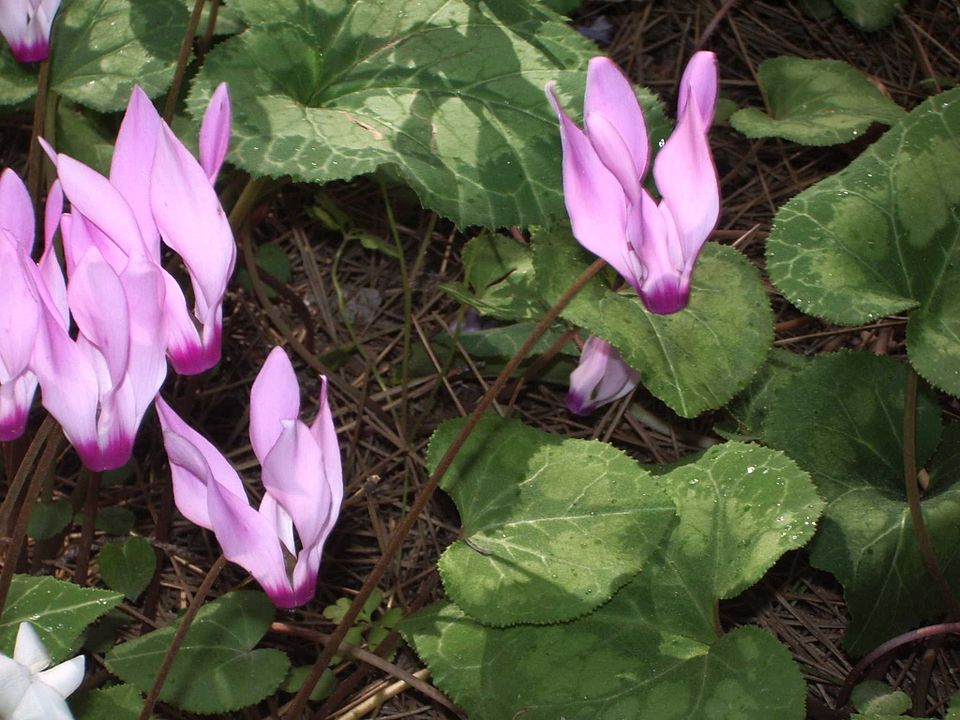
Cyclamen
Cyclamen spp.
Cyclamen (Cyclamen spp.) is a common flowering houseplant, especially popular in winter and around holidays. Its flowers are bright and attractive, but it is not safe for cats. The entire plant is toxic, and the underground tuber contains the highest concentration of toxic compounds. The main concern is a group of plant compounds called triterpenoid saponins, especially cyclamin. These substances can irritate the digestive tract and may disturb the stability of cell surfaces, which is why cats can become quite uncomfortable after eating the plant. Small nibbles of leaves or flowers usually cause mostly digestive signs, but the risk is much higher if a cat digs in the pot and chews or swallows the underground tuber. Large amounts may also affect the heart rhythm and lead to more serious poisoning. If a cat eats cyclamen, possible signs include drooling, vomiting, diarrhea, loss of appetite, low energy, and abdominal discomfort. If a larger amount of the tuber is eaten, weakness, abnormal heart rhythm, or more severe reactions may occur. Homes with cats should avoid keeping cyclamen, especially where cats may dig in the soil or chew the plant. If your cat eats any part of cyclamen, particularly the tuber, contact a veterinarian promptly; seek urgent care if repeated vomiting, weakness, or abnormal heartbeat occurs.
Important Notes
Symptoms: Drooling, vomiting, diarrhea, and abdominal pain from mild ingestion; larger amounts can cause irregular heart rhythm, seizures, and in severe cases death.
Tubers are most toxic: The fleshy underground tuber contains the greatest saponin concentration — significantly more than the leaves or flowers.
Action: Seek immediate veterinary care if a cat has chewed on the tuber, or if any cardiac symptoms (weakness, collapse) develop.
Potentially Toxic Parts
Root
Possible Symptoms Reported in Cats
Cardiac Arrhythmias
Cardiac
Seizures
Neurological
Vomiting
Gastrointestinal · Rapid
Drooling
Gastrointestinal · Rapid
Disclaimer: This summary was compiled from multiple sources and is for informational use only. It is not a diagnosis or treatment plan. Toxicity can vary based on the substance, amount, plant part, and individual cat. If you think your cat may have been exposed to a toxic substance, contact a veterinarian right away.