 ←
←
Fire Lily
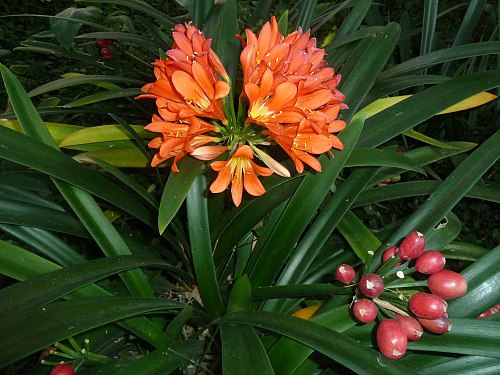
Clivia miniata
Fire Lily (Clivia miniata), also called Clivia Lily or Kaffir Lily, is an ornamental plant with strap-like leaves and bright orange flowers. It is toxic to cats. The bulb and lower stem area are the most dangerous parts, but the leaves and flowers should also be kept away from cats. The main toxin is lycorine, along with related alkaloids. These compounds strongly irritate the stomach and can also affect blood pressure, the nervous system, and heart rhythm if a larger amount is eaten. Cats are most likely to chew the leaves or dig at the base of a potted plant. Possible signs include drooling, vomiting, diarrhea, belly pain, low energy, tremors, or wobbliness. Larger exposures can cause low blood pressure, seizures, or heart rhythm problems. Keep Fire Lily plants and bulbs out of reach, and call a veterinarian promptly if your cat chews any part of the plant.
Important Notes
Main hazard: Lycorine and related alkaloids are most concentrated in the bulb and plant base.
Symptoms: Drooling, vomiting, diarrhea, belly pain, low energy, tremors, or wobbliness.
Higher concern: Larger amounts may cause low blood pressure, seizures, or heart rhythm problems.
Action: Keep plants and bulbs away from cats and call a vet if any part is chewed or eaten.
Potentially Toxic Parts
Bulb
Leaf
Flower
Stem
Possible Symptoms Reported in Cats
Low blood pressure, seizures, or heart rhythm problems
Cardiac · Possible after larger ingestion, especially bulb material.
Drooling, vomiting, diarrhea, or belly pain
Gastrointestinal · Often begins within a few hours after chewing or ingestion.
Low energy, weakness, tremors, or wobbliness
Neurological · May appear after stomach upset or with larger exposure.
Disclaimer: This summary was compiled from multiple sources and is for informational use only. It is not a diagnosis or treatment plan. Toxicity can vary based on the substance, amount, plant part, and individual cat. If you think your cat may have been exposed to a toxic substance, contact a veterinarian right away.