
 ←
←
Bittersweet
Celastrus scandens
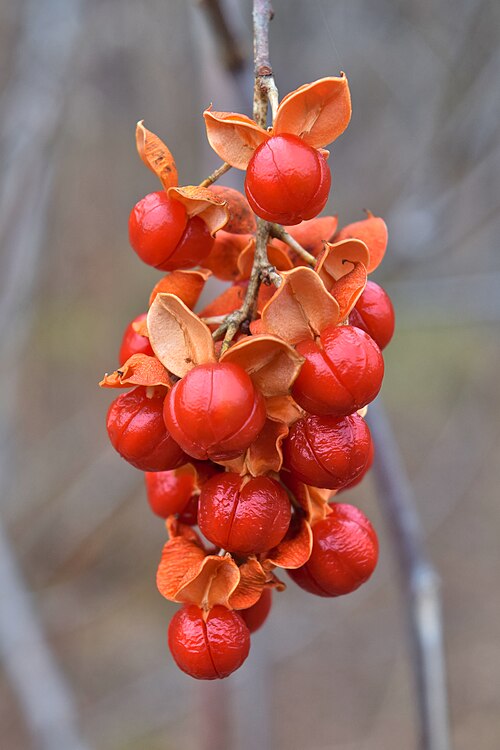
American Bittersweet (Celastrus scandens) is a vigorous woody vine native to North America, easily recognised by its orange-yellow berries that split open to reveal bright red seeds. All parts of the plant are toxic to cats, including the leaves, bark, roots, berries, and seeds. ASPCA lists the toxic principles as cardenolides and alkaloids; the plant mainly irritates the gastrointestinal tract. Toxicity is generally low, with mild self-limiting signs such as vomiting and diarrhea, and rarely weakness or seizures after large ingestions. The vivid berries are the most likely point of contact for cats, particularly when the vine is brought indoors as a decorative autumn cutting.
Important Notes
Symptoms: Vomiting, diarrhea, and abdominal pain from GI irritation; larger exposures may cause lethargy, muscle weakness, and rarely seizures.
Berries are the primary hazard: Brightly coloured and accessible, the berries are appealing to curious cats — avoid using the plant as indoor decoration.
Action: Seek veterinary care if more than a small berry has been ingested, particularly if lethargy or weakness develops.
Potentially Toxic Parts
Berries
Seed
Leaves
Bark
Roots
Possible Symptoms Reported in Cats
Seizures (rare)
Neurological · Variable; with larger ingestions.
Vomiting and Diarrhea
Gastrointestinal · 2–24 hours.
Weakness and Lethargy
Neurological · 2–24 hours (typically follows or accompanies GI signs).
Disclaimer: This summary was compiled from multiple sources and is for informational use only. It is not a diagnosis or treatment plan. Toxicity can vary based on the substance, amount, plant part, and individual cat. If you think your cat may have been exposed to a toxic substance, contact a veterinarian right away.