
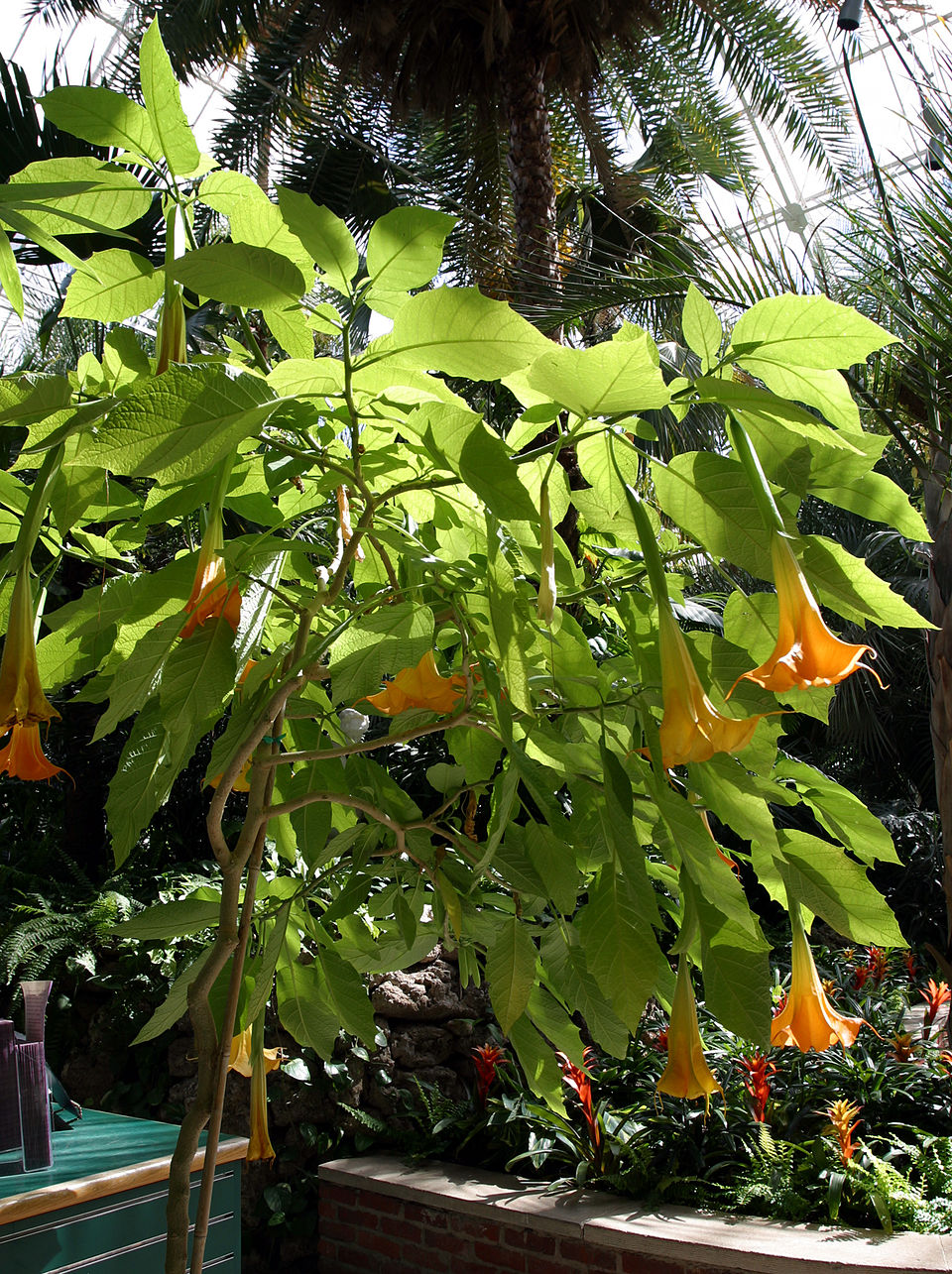
Angel's Trumpets
Brugmansia spp.
Yes. Keep it out of reach.
Angel’s Trumpets usually refers to Brugmansia spp., and is closely related to Datura. It is one of the most dangerous ornamental plants for cats.
Symptoms reported in cats
Most serious first.
- 1 Behavioral changes and Disorientation The plant affects the nervous system, leading to noticeable changes in behavior and confusion.
- 2 Dilated Pupils (Mydriasis) This is a hallmark sign of the plant's toxicity, often associated with the alkaloids present in the plant.
- 3 Hyperthermia Ingestion causes a dangerous elevation in body temperature.
- 4 Change in heart rate The toxins alter vital signs, specifically affecting cardiac rhythm and rate.
- 5 Change in respiratory rate Alongside cardiac changes, the respiratory rate is significantly altered, necessitating immediate veterinary intervention.
- 6 Loss of appetite While neurological and cardiac signs are prominent, the cat may also refuse food.
Important notes
Angel’s Trumpets usually refers to Brugmansia spp., and is closely related to Datura. It is one of the most dangerous ornamental plants for cats. Every part of the plant — flowers, leaves, stems, seeds, roots, nectar, and sap — is toxic and may contain tropane alkaloids, mainly atropine, scopolamine, and hyoscyamine. Seeds and leaves may contain especially high concentrations.
- Symptom progression: Dilated pupils, rapid heart rate, dry mouth, restlessness, disorientation, tremors, and difficulty urinating; severe cases may progress to hyperthermia, seizures, respiratory failure, coma, and death.
- All parts are toxic: Seeds and leaves may be especially concentrated, but flowers, stems, roots, nectar, sap, and pollen are also dangerous.
- Indirect exposure: Grooming pollen or plant residue from the coat may cause symptoms.
- Action: Treat as a veterinary emergency. Contact a vet immediately and bring a sample or photo of the plant if possible.
This summary was compiled from multiple sources and is for informational use only. It is not a diagnosis or treatment plan. Toxicity varies with the substance, amount, plant part and the individual cat. If you think your cat may have been exposed to a toxic substance, contact a veterinarian right away.