
 ←
←
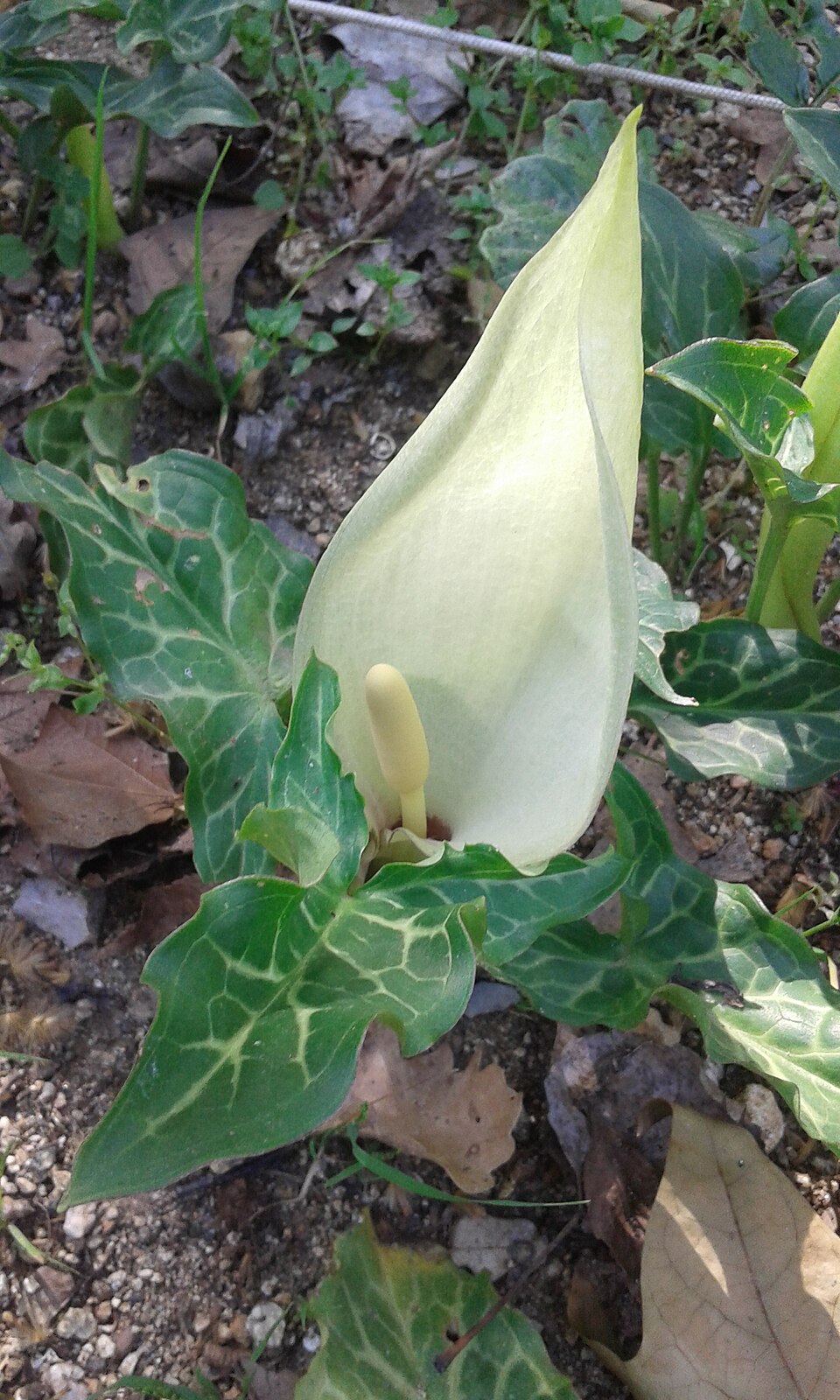
Italian Arum
Arum spp.
Italian Arum (Arum spp., often Arum italicum) is an ornamental plant with arrow-shaped leaves and bright berries. It is unsafe for cats because the leaves, stems, tubers, and berries can all irritate the mouth and digestive tract. The main problem is insoluble calcium oxalate crystals. These tiny, needle-like crystals are released when a cat bites the plant. They can scratch and burn the lips, tongue, mouth, and throat. The plant may also contain other irritating compounds, and the colorful berries can be especially tempting. A cat that chews Italian arum may drool, paw at the mouth, vomit, or have trouble swallowing. Swelling in the mouth or throat can become serious. Keep the plant and loose berries away from cats, and call a veterinarian if your cat chews any part of it or shows mouth swelling, repeated vomiting, or breathing trouble.
Important Notes
Toxic compounds: insoluble calcium oxalate raphides, aroin (toxic protein), saponins; berries most concentrated
Mechanism: raphides cause immediate mechanical irritation to the oral and GI mucosa; aroin and saponins add systemic toxicity
Symptoms: intense oral burning, drooling, pawing at mouth, vomiting, diarrhea; severe berry ingestion may cause systemic illness
The attractive orange-red berries pose the greatest risk, particularly to inquisitive cats
Seek veterinary care if berry ingestion is suspected or if GI symptoms are severe
Potentially Toxic Parts
Root
Leaf
All parts of the plant
Flower
Possible Symptoms Reported in Cats
Mucous Membrane Irritation and Ulcerations
Gastrointestinal · Acute (The irritation is a direct contact effect).
Vomiting and Diarrhea
Gastrointestinal · Acute (Following the irritation of the gastric lining).
Abdominal Pain / Discomfort
Gastrointestinal · Acute.
Dehydration
Metabolic · Delayed (Occurs as a result of persistent vomiting and diarrhea).
Disclaimer: This summary was compiled from multiple sources and is for informational use only. It is not a diagnosis or treatment plan. Toxicity can vary based on the substance, amount, plant part, and individual cat. If you think your cat may have been exposed to a toxic substance, contact a veterinarian right away.