Flamingo Flower / Anthurium
Anthurium spp.
Yes. Keep it out of reach.
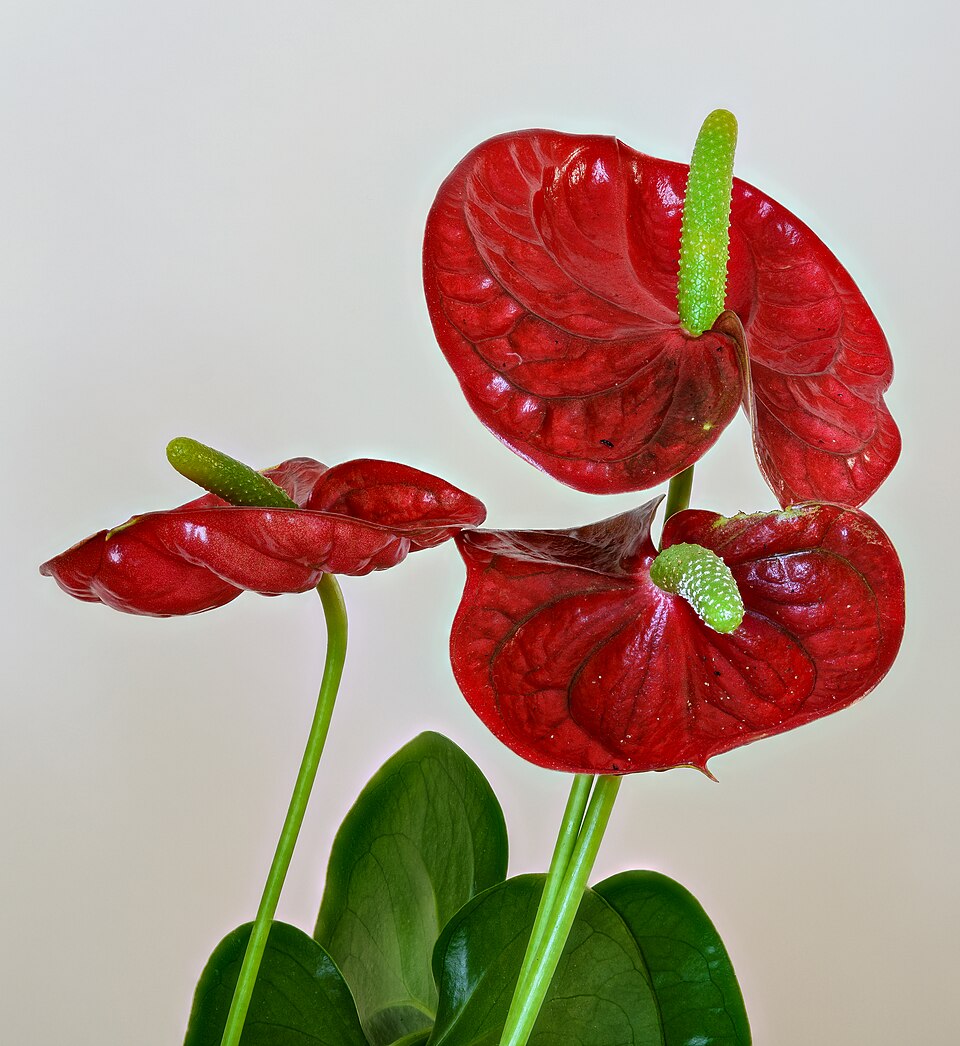
Flamingo Flower and Anthurium (Anthurium spp.) are tropical houseplants with glossy leaves and bright, waxy-looking flowers. They are toxic to cats if chewed.
Symptoms reported in cats
Most serious first.
- 1 Oral pain, drooling, or pawing at the mouth Usually immediate while chewing.
- 2 Swollen lips, tongue, or throat Can occur quickly after chewing.
- 3 Vomiting or trouble swallowing Usually soon after oral irritation begins.
Important notes
Flamingo Flower and Anthurium (Anthurium spp.) are tropical houseplants with glossy leaves and bright, waxy-looking flowers. They are toxic to cats if chewed. All parts of the plant should be kept away from cats. The danger comes from insoluble calcium oxalate crystals, sometimes called raphides. These tiny needle-like crystals are released when the plant is bitten. They can pierce and irritate the soft tissues of the mouth and throat, causing immediate pain and swelling. Signs often start right away and may include pawing at the mouth, drooling, lip or tongue swelling, vomiting, or trouble swallowing. Most cats stop chewing quickly because it hurts, but swelling can still be stressful. Rinse the mouth gently with water if your cat allows it, remove the plant, and contact a veterinarian if symptoms continue or swallowing seems difficult.
- Main hazard: Insoluble calcium oxalate crystals cause immediate mouth and throat irritation.
- Symptoms: Pawing at the mouth, drooling, swollen lips or tongue, vomiting, or trouble swallowing.
- Risk level: All parts are irritating; pain often stops the cat from eating a large amount.
- Action: Remove plant material, offer water, and call a vet if swelling or swallowing trouble continues.
This summary was compiled from multiple sources and is for informational use only. It is not a diagnosis or treatment plan. Toxicity varies with the substance, amount, plant part and the individual cat. If you think your cat may have been exposed to a toxic substance, contact a veterinarian right away.