
 ←
←
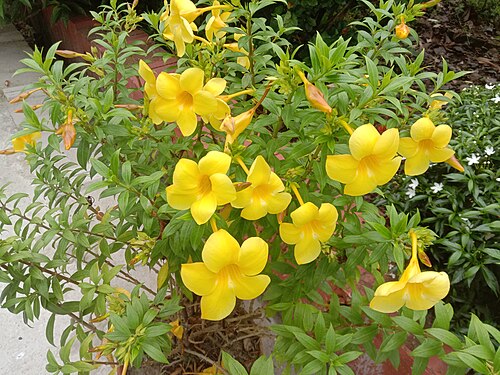
Allamanda
Allamanda cathartica
Allamanda belongs to the Apocynaceae family and is a popular tropical ornamental shrub, loved for its bright yellow, trumpet-shaped flowers, but every part of the plant — leaves, stems, flowers, seeds, and its milky white sap — is toxic to cats. The plant contains iridoid compounds (including allamandin) that act as powerful cathartics and severe gastrointestinal irritants. The milky sap poses an additional hazard as a direct irritant to skin, eyes, and mucous membranes.
Important Notes
Symptoms: Vomiting, diarrhea (which may be bloody), abdominal pain, and drooling from ingestion; redness, swelling, and pain if sap contacts the skin or eyes.
All parts toxic: Flowers, leaves, stems, seeds, and sap all contain toxic compounds.
Action: Seek immediate veterinary care if a cat ingests any part of the plant or shows signs of distress.
Potentially Toxic Parts
Bark
Leaf
Seed
Fruit / berry
milky sap/ latex
Possible Symptoms Reported in Cats
Dehydration
Metabolic · Secondary effect, developing after sustained fluid loss from diarrhea.
Abdominal discomfort (pain)
Gastrointestinal
Diarrhea
Gastrointestinal
Electrolyte imbalance
Hematological · Secondary effect, following fluid loss.
Disclaimer: This summary was compiled from multiple sources and is for informational use only. It is not a diagnosis or treatment plan. Toxicity can vary based on the substance, amount, plant part, and individual cat. If you think your cat may have been exposed to a toxic substance, contact a veterinarian right away.