 ←
←
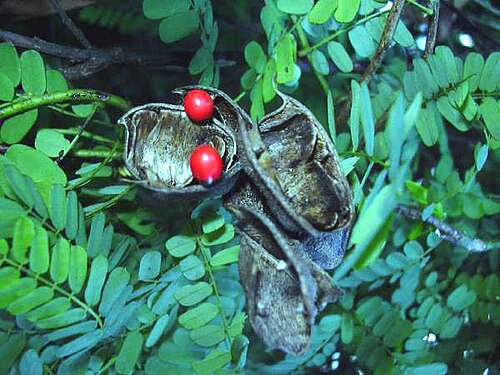
Rosary Pea
Abrus precatorius
Rosary Pea (Abrus precatorius) is a highly dangerous plant for cats. Its seeds contain abrin, a powerful toxin that stops cells from making the proteins they need to survive. This leads to cell death and gradual failure of the body's organs. The danger mostly comes from chewed or broken seeds. If a cat swallows a whole seed with its hard shell intact, it might pass through the digestive system without causing harm. However, if the seed coat is cracked, even a tiny amount of abrin can be life-threatening. If the toxin is released, a cat may experience vomiting, diarrhea, weakness, and stomach pain within a few hours. In severe cases, it can cause seizures and organ failure. If you suspect your cat has chewed a Rosary Pea seed, treat it as an absolute emergency and contact a veterinarian immediately—do not wait for symptoms to appear.
Important Notes
Toxic compounds: abrin (ribosome-inactivating protein) in seeds; leaves contain abrine alkaloid
Mechanism: abrin halts protein synthesis in cells by inactivating ribosomes; affected cells die; organs fail progressively
Symptoms (delayed 2–6h): vomiting, diarrhea, weakness, abdominal pain; severe cases cause multi-organ failure, seizures, and death
Intact swallowed seeds may pass without harm; cracked or chewed seeds are a medical emergency
Any suspected abrin exposure is a veterinary emergency — do not wait for symptoms
Potentially Toxic Parts
Seed
Possible Symptoms Reported in Cats
Gastrointestinal signs (which typically lead to significant dehydration and electrolyte imbalances)
Gastrointestinal
Disclaimer: This summary was compiled from multiple sources and is for informational use only. It is not a diagnosis or treatment plan. Toxicity can vary based on the substance, amount, plant part, and individual cat. If you think your cat may have been exposed to a toxic substance, contact a veterinarian right away.